2021 • Ahead • Founding Product Designer
Clinical Operations and Support Platform
Role
Identified the need for an internal ops platform and pitched it to the CEO. Mapped the full service blueprint connecting patient care, provider workflows, prescription management, and pharmacy fulfillment — then designed the platform that operationalized it. This tool wasn't on anyone's roadmap; I surfaced it by observing where the care delivery process was breaking down.
Outcome
Transformed a manual, all-hands-on-deck operation into a structured workflow that reduced handoff errors and enabled the ops team to scale with patient growth.
Team / Stakeholders
Product Manager
Engineering
CEO
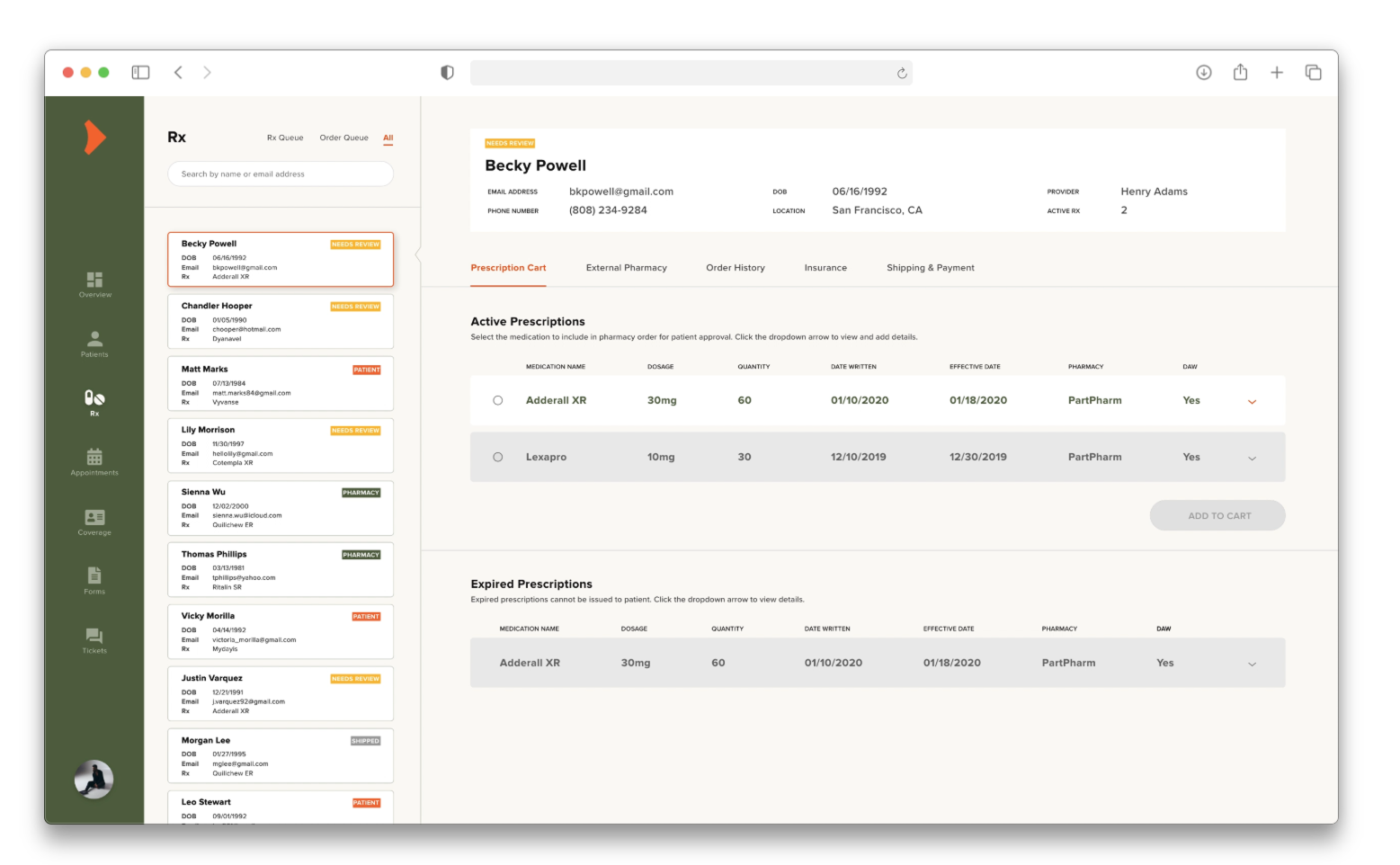
A HIPAA-compliant internal platform that connects provider notes, patient data, insurance records, prescription management, and pharmacy fulfillment in one system — giving customer ops a single workflow from patient intake through medication delivery, replacing disconnected tools and manual coordination.
The Challenge
Patient growth outpaced the team's ability to support it. Customer ops had no dedicated tool — they were managing communications, insurance handling, and prescription coordination across disconnected systems.
The situation was severe enough that the entire company (~10–15 people) had to step in to handle basic support operations. The focus had been entirely on the patient-facing product; no one had thought about the backend workflow that made care delivery actually function.
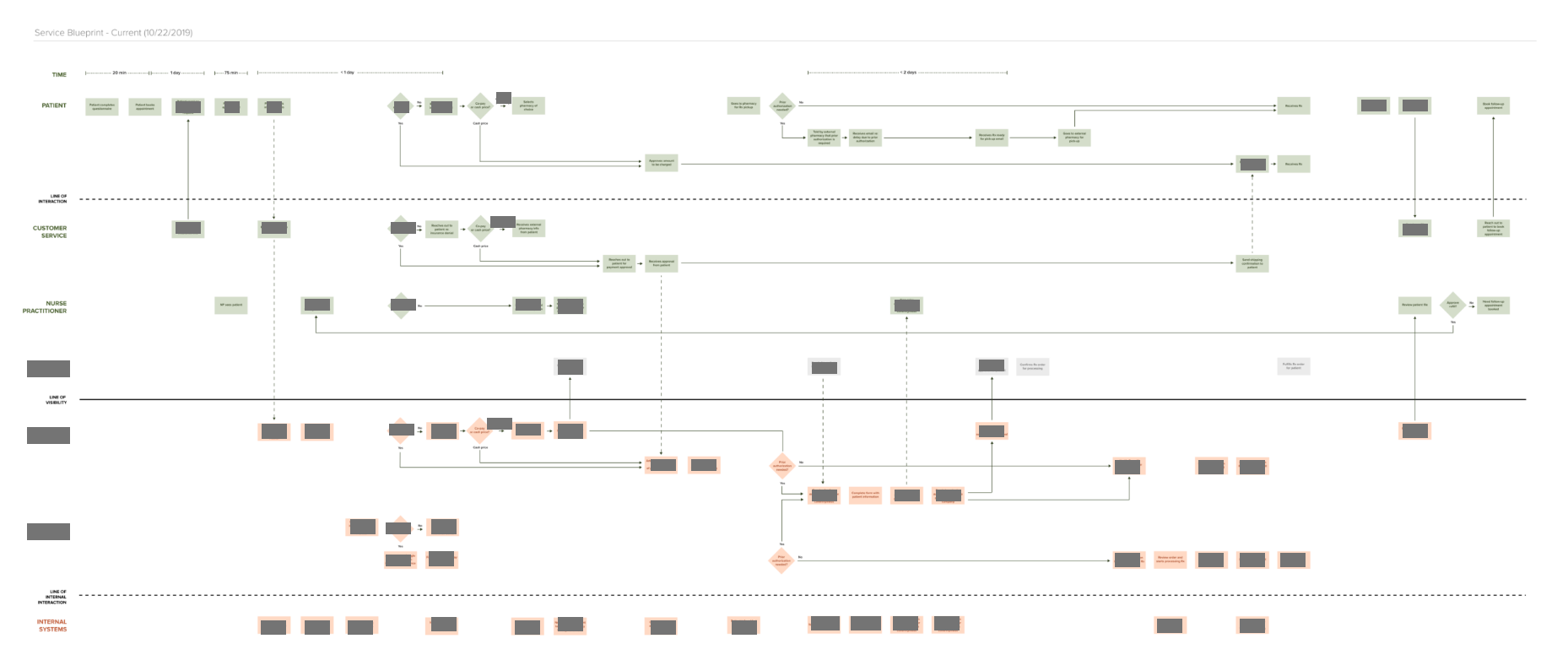
Service blueprint including all different roles, systems, and user touchpoints
Key Decisions
Surfaced an invisible infrastructure gap
The company was focused on patient acquisition and the consumer-facing experience. I recognized that without a backend system connecting providers, ops, and pharmacy, the care model wouldn't survive its own growth. I pitched the platform to the CEO as a prerequisite to scaling — not a nice-to-have.
Designed for the full care chain, not just the ops team
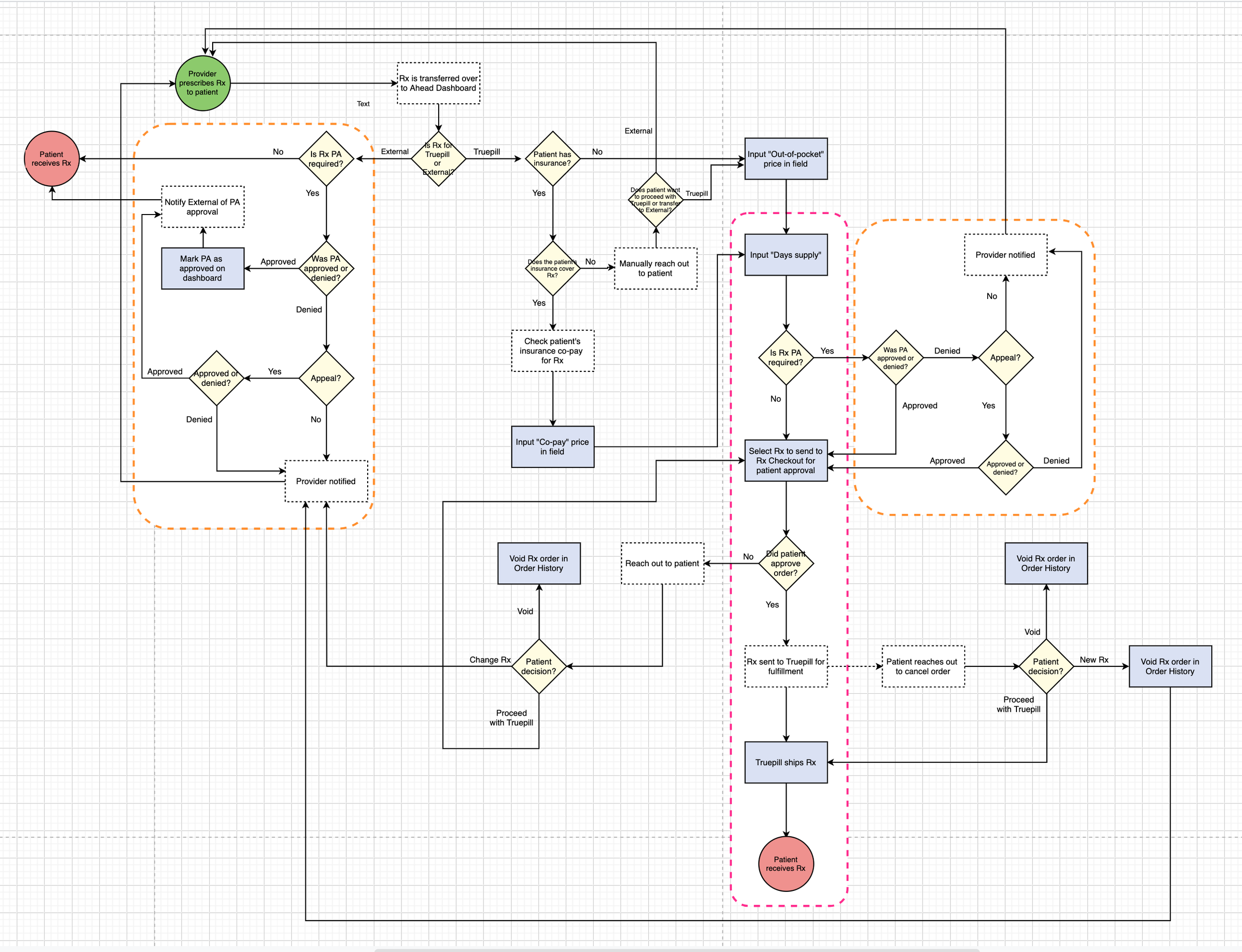
Rather than building a basic admin panel, I mapped the workflow across every handoff: provider prescribes → nurse practitioner reviews → customer ops handles compliance and creates the order → patient receives and approves → confirmed order routes to partner pharmacy for fulfillment. Each step had different users with different needs — the platform had to serve all of them without creating new bottlenecks.
Scoped around the highest-pain workflow first
With the entire company pulled into ops work, I focused the first release on the prescription process — the most error-prone and time-intensive handoff chain. Other modules (communications, insurance management) followed once the critical path was stable.
What informed my decisions
The service blueprint revealed how many disconnected roles, systems, and touchpoints were involved in a single patient's care chain — each with its own tool. I researched API capabilities across existing systems (DrChrono, CoverMyMeds) to confirm what could be consolidated into one platform versus what needed to stay separate.
That research shaped which workflows to bring in-house and which to integrate via API, preventing us from rebuilding systems that already worked while connecting the ones that didn't talk to each other.
Results
Replaced manual, company-wide firefighting with a structured ops workflow
Reduced handoff errors between providers, ops, and pharmacy
Ops team absorbed patient growth without requiring the full company to supplement support
Streamlined the prescription chain from provider to patient approval to pharmacy fulfillment
Created the company's first defined backend support process
View other projects
AI-powered claims intake automation
Customer-facing death claims intake & profile experience