2025 • MetLife • Senior Product Design Consultant
Customer-Facing Claims and Account Experience
Role
Sole design consultant — conducted a UX audit of the existing death-claims experience that reshaped the project scope from a single-flow fix to a full beneficiary journey redesign.
Defined the strategy for integrating MetLife's TCA product into a sensitive claims context, and redesigned intake, post-intake tracking, profile management, and payout selection. Worked with VP of Design, product owners, and Head of Claims.
Outcome
Redesigned the full beneficiary journey to reduce friction, improve transparency, while introducing MetLife's TCA product in a way that respected the emotional context of filing after a loss.
Team / Stakeholders
VP of Design
Product Owners
Head of Retail Claims
A redesigned death claims experience for beneficiaries and estate managers — covering intake, document collection, claims status tracking, payout selection (including TCA enrollment), and profile management.
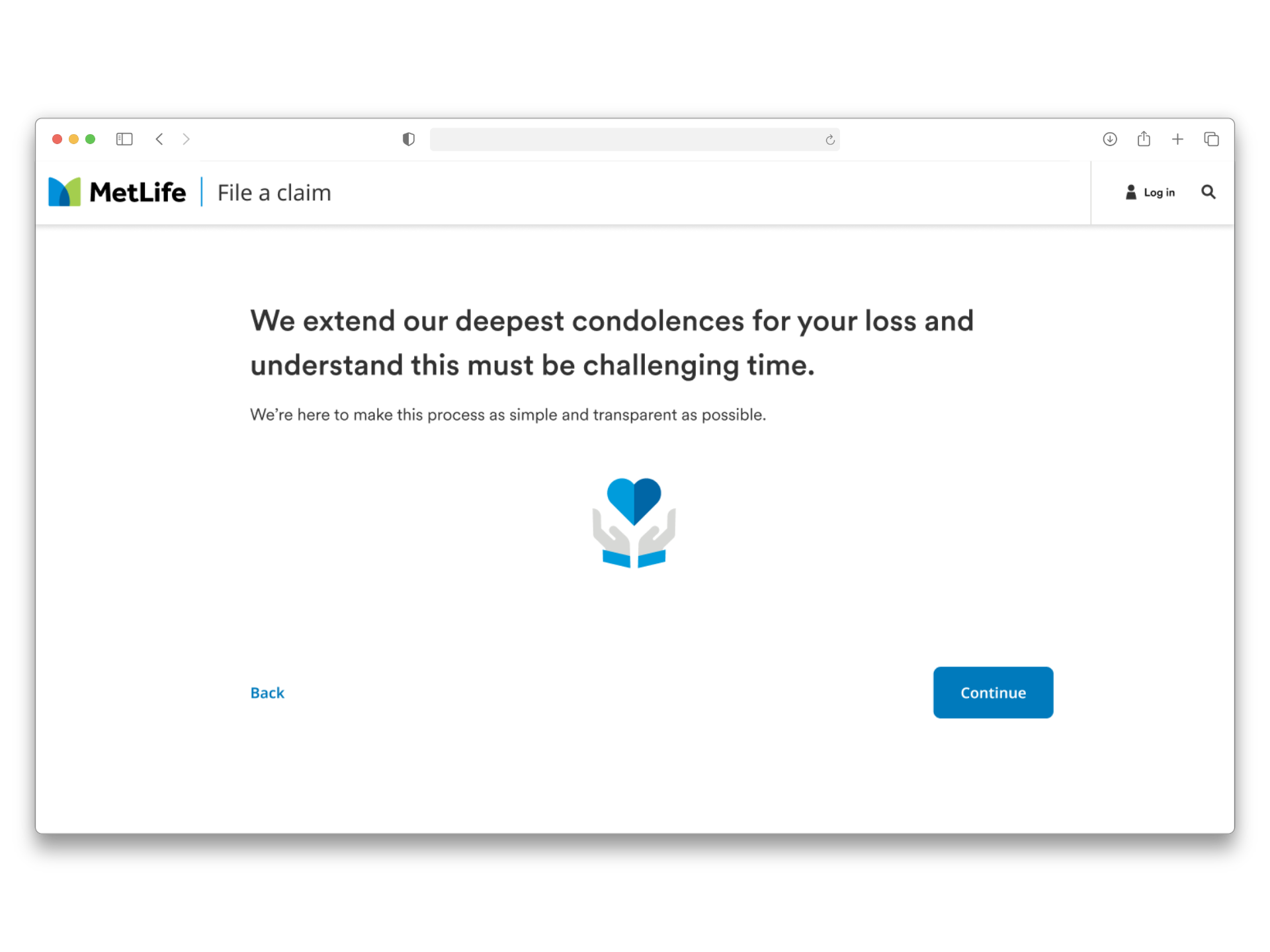
Designed to guide users through a high-stakes, emotionally charged process with clarity and sensitivity.
The Challenge
Beneficiaries filing after a death faced redundant forms, no document guidance, and no way to track their claim. The business also needed to introduce MetLife's TCA — a checking account holding payout funds — into this flow, creating a tension between business objectives and the sensitivity of the moment.
Key Decisions
Audit expanded the project scope
I was brought in to fix the intake flow. My assessment surfaced problems across the entire journey — redundant data, no post-intake visibility, disconnected profile management. I presented findings to the VP of Design and Head of Claims, which expanded the engagement to a full redesign.
Positioned TCA as a neutral choice, not a sell
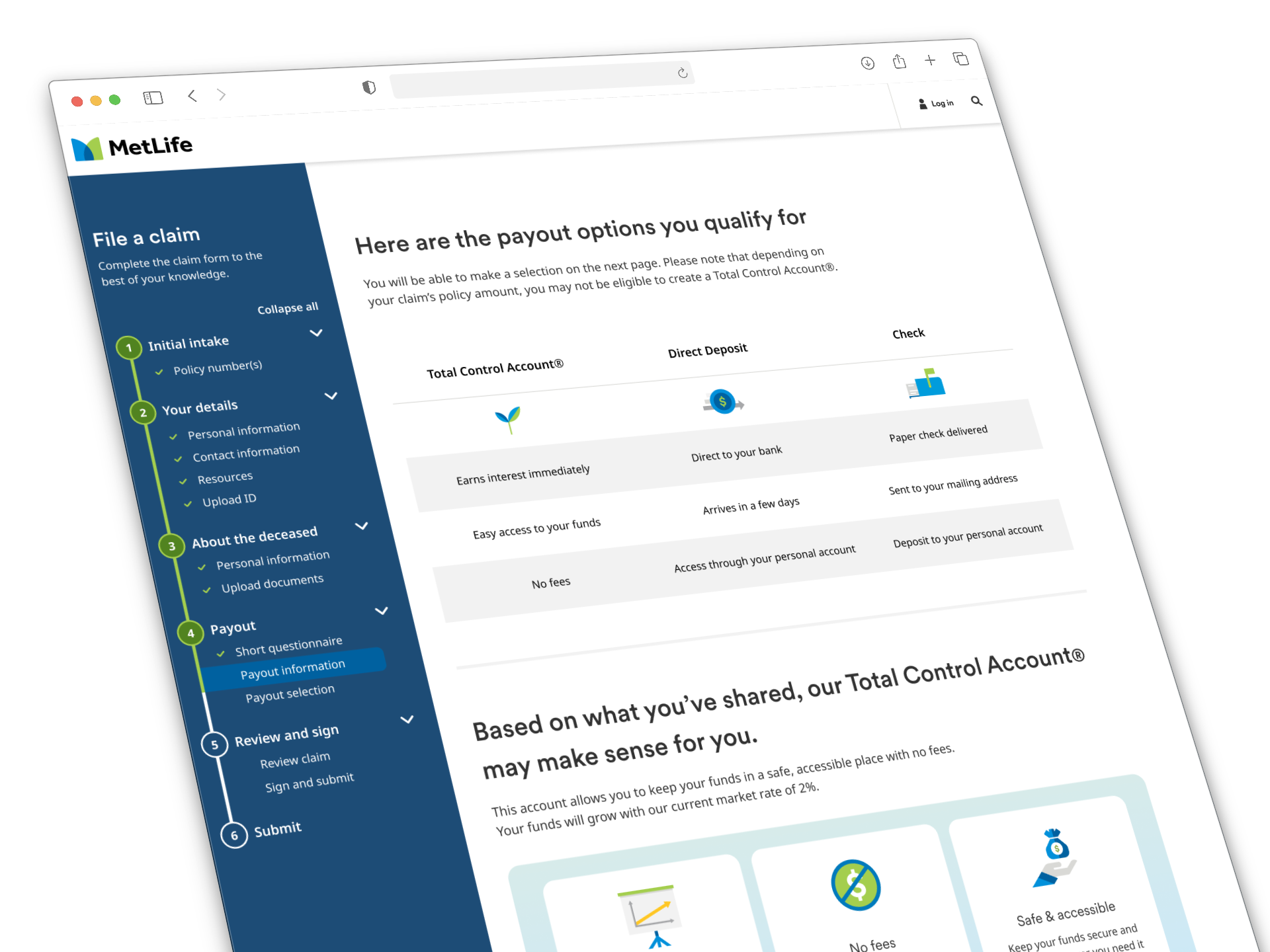
I designed TCA as one of three equal payout options with neutral language and no default selection — making it a legitimate consideration without exploiting a vulnerable moment.
Eliminated redundancy and added post-intake transparency
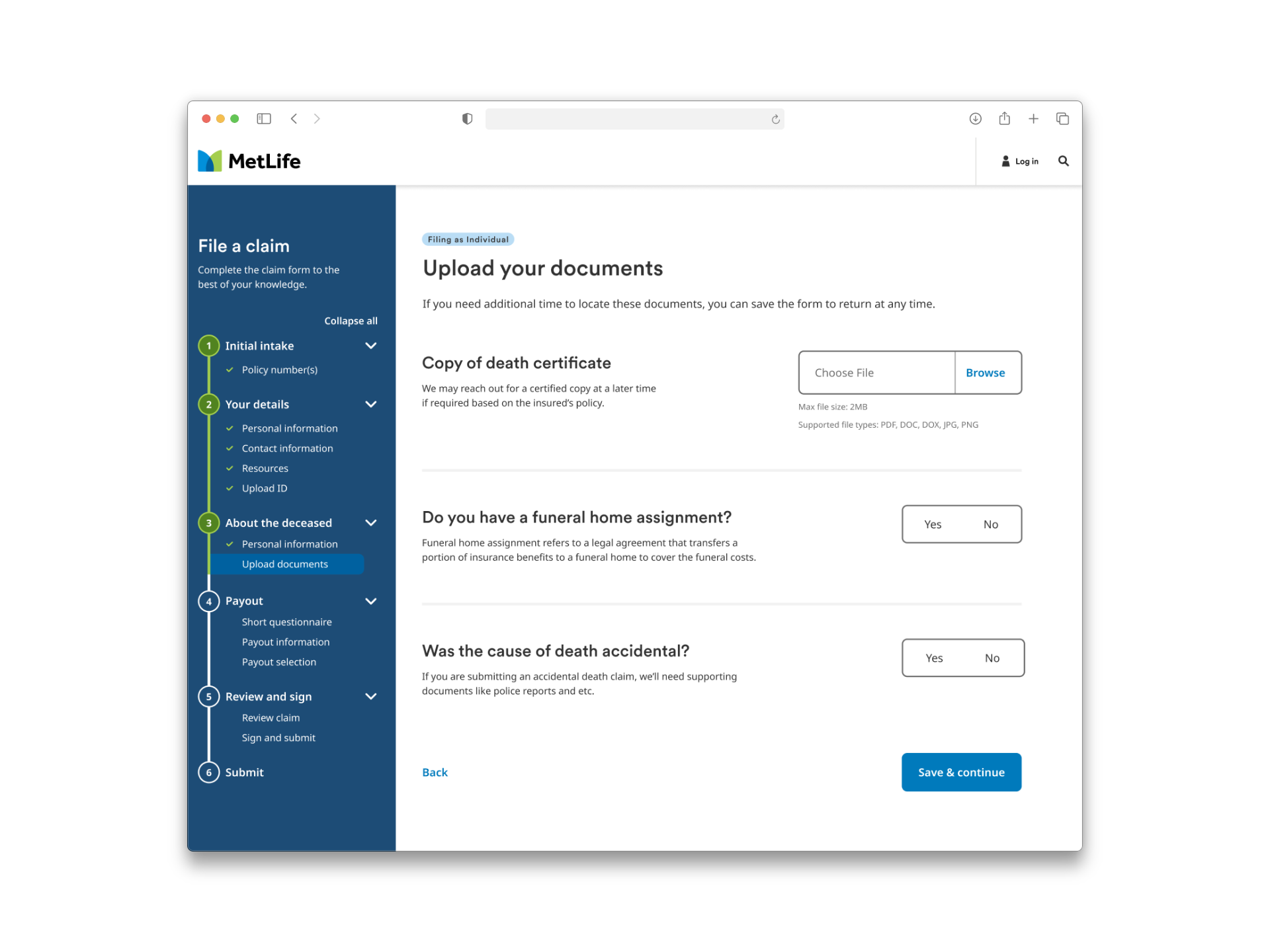
Consolidated inputs so nothing was asked twice, surfaced document requirements upfront, and introduced a claims status view showing where the claim stood and what was still needed — none of which existed before.
What informed my decisions
Walking through the existing flow as a beneficiary made the emotional disconnect clear — the process treated a grieving person like a form submission. Conversations with the Head of Claims confirmed that follow-up calls for missing documents were an operational burden, not just a UX issue. The TCA integration required close collaboration with product owners to understand the business goal, then careful design judgment to present it without compromising the beneficiary's experience.
Results
Audit expanded a single-flow fix into a full beneficiary journey redesign
Introduced TCA respecting the emotional context while supporting MetLife's objective
Eliminated redundant data entry and surfaced document requirements upfront
Gave beneficiaries claims status visibility for the first time
View other projects
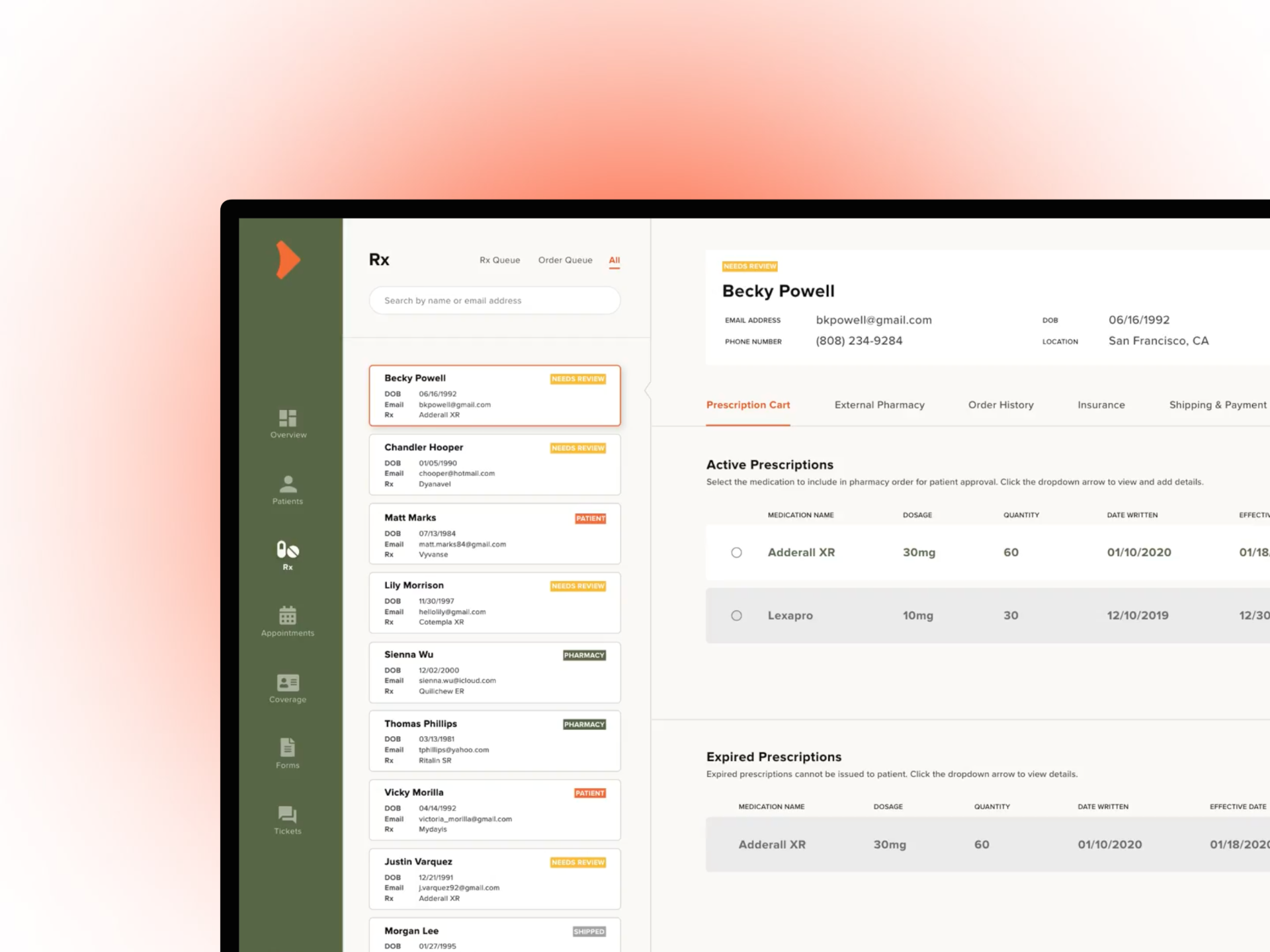
Clinical operations and customer support platform
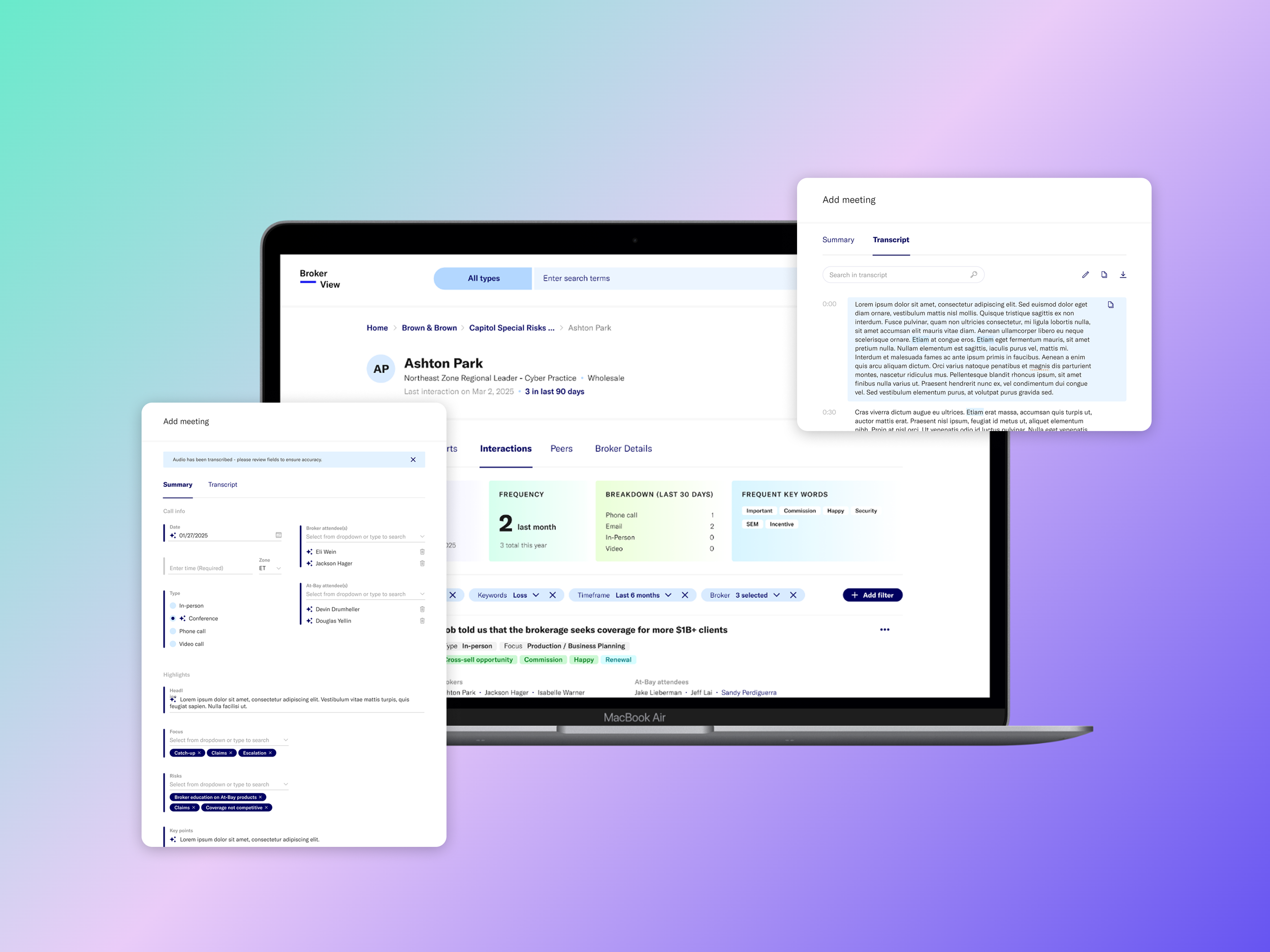
AI-powered transcription for broker meetings