2025 • At-Bay • Product Design Lead
Broker Relationship Platform (CRM) for Underwriters
Role
Defined the problem space and product vision with underwriting leadership, PM, and senior underwriters. Translated a vague leadership frustration into a scoped roadmap and feature priorities. Designed the platform end-to-end — hierarchical data architecture, broker profiles, interaction tracking, task reminders, and data surfacing from internal systems.
Outcome
Became a daily-use tool for underwriters
Gave leadership first-ever visibility into broker relationships across the org, and enabled strategic planning around broker and portfolio growth
Team / Stakeholders
Product Manager
Engineering (Tel Aviv)
Head of National Broker Relations
Head of Wholesale Field
Senior Underwriters
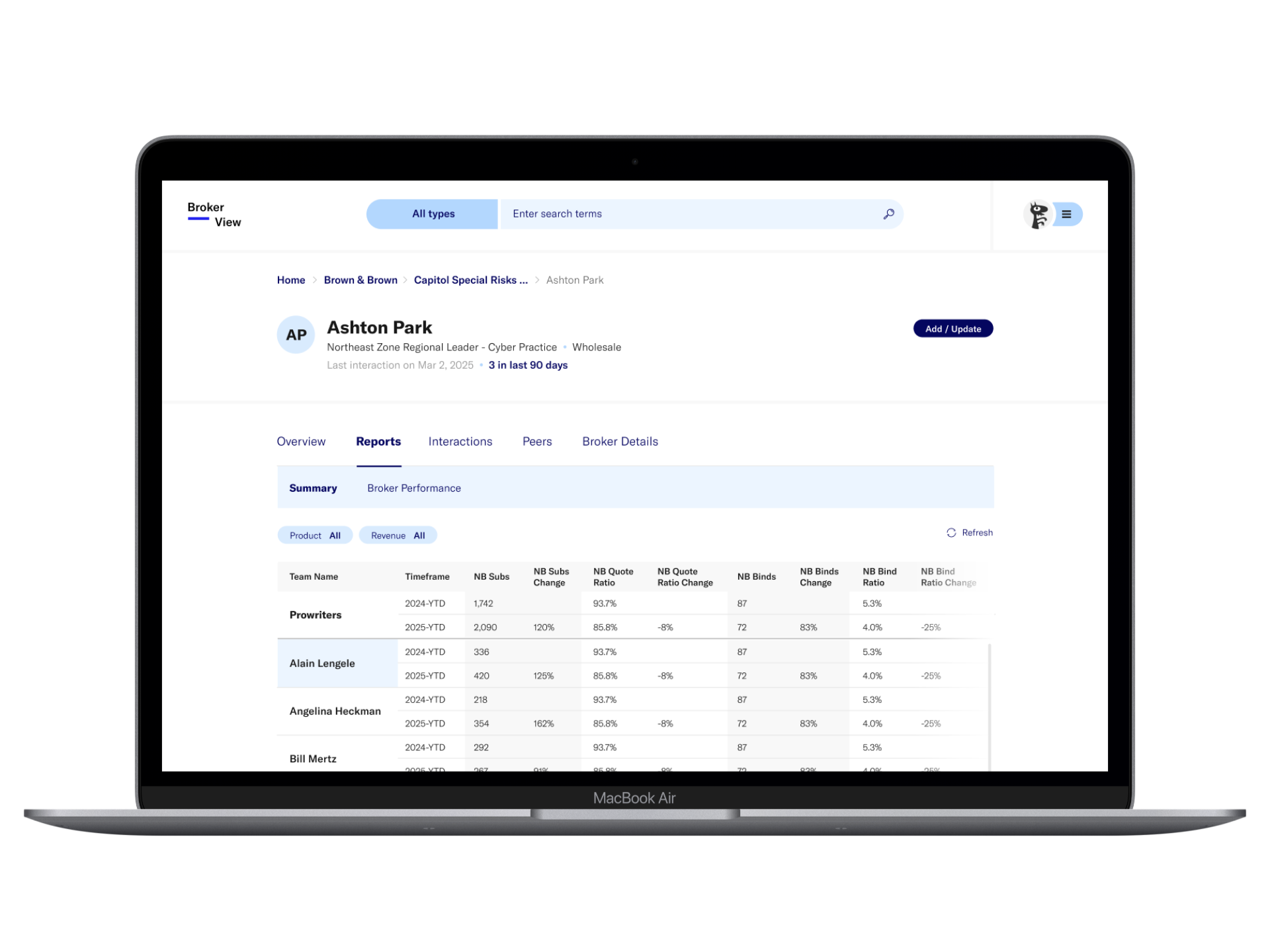
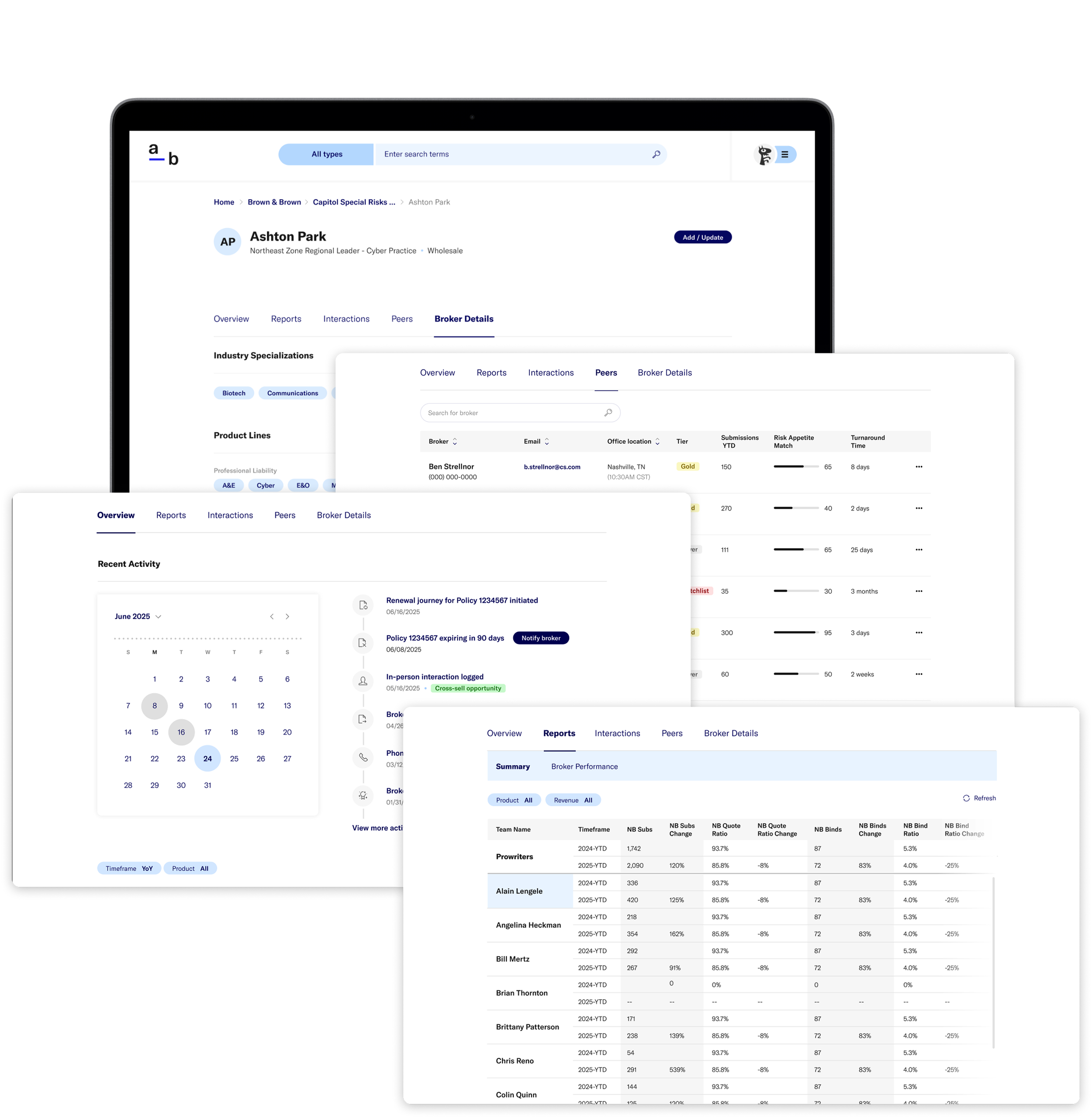
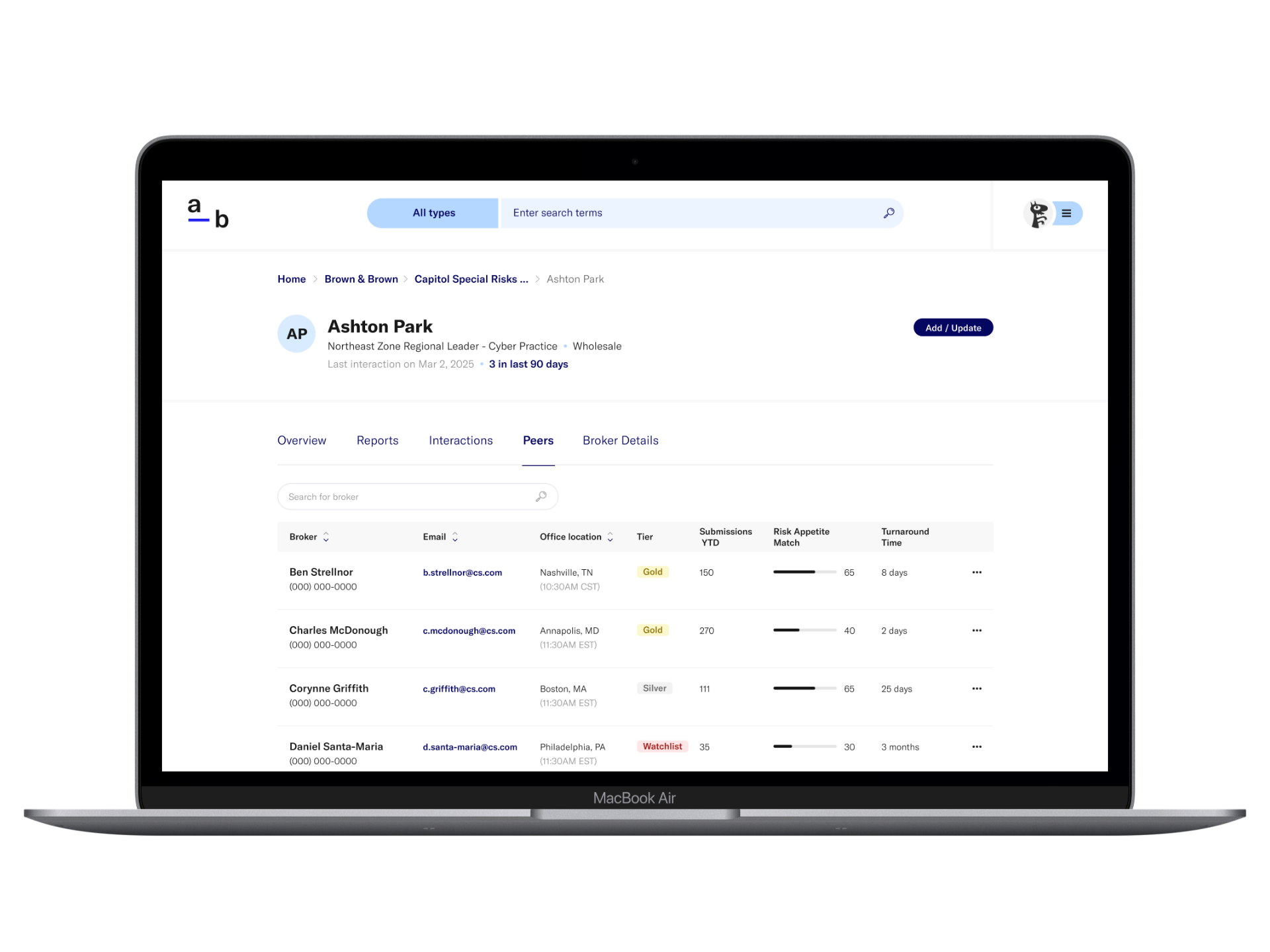
A broker intelligence platform that consolidates relationship data, performance metrics, and interaction history across a four-level hierarchy — broker, team, office, brokerage — giving underwriters the context to manage relationships and giving leadership a strategic view into portfolio performance.
The Challenge
Leadership was frustrated by the lack of consolidated broker data but had no clear product vision for solving it. Underwriters managed relationships from memory and personal notes, each with their own system. The only shared tool was a Tableau dashboard that was hard to navigate and rarely surfaced information relevant to actual broker conversations.
Key Decisions
Turned a vague frustration into a scoped product
Leadership described the problem but not the solution. I led discovery by asking what "building relationships" actually looked like day-to-day — how underwriters prepped, how they tracked notes, what the top performers did differently. That research directly shaped the roadmap and feature prioritization with PM.
Designed for a messy hierarchy, not a clean one
Brokers move between offices and brokerages without notifying underwriters — so stale data was the norm. I designed edit flows with explicit hierarchy context and blocked states to prevent misattribution, ensuring performance data stayed accurate as brokers moved across the system.
Prioritized what underwriters valued, not just what the business measured
Research revealed that personal details — birthdays, preferences, what brokers liked and disliked — were critical to how underwriters built trust. I flagged this to PM and we aligned on including it in MVP since the engineering cost was minimal but the adoption impact was high.
What informed my decisions
Interviews with underwriters and leadership surfaced a gap between what the business wanted (performance data and strategy) and what underwriters needed to do their job well (relationship context and personal notes).
The top-performing underwriters weren't just tracking numbers — they were tracking personal details and communication cadence. The hierarchy complexity and broker movement problem only became clear once I mapped how data actually flowed across broker, team, office, and brokerage levels.
Results
Adopted as the primary tool for underwriters managing broker relationships day-to-day
Performance data and surfaced insights gave underwriters specific numbers to reference in broker conversations — visibility they'd never had before
Senior underwriters and team managers used the platform to plan broker interactions and outreach more strategically
Gave leadership a consolidated view into broker performance across the org, enabling portfolio-level growth planning for the first time
View other projects
Clinical operations and customer support platform
Customer-facing death claims intake & profile experience